
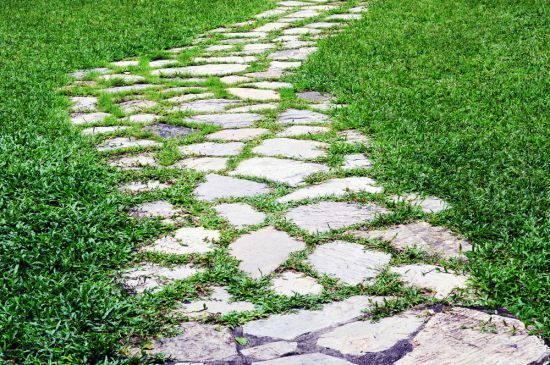
Your front walkway is the first thing guests and potential buyers experience about your home. It sets the tone before anyone reaches your front door. While poured concrete is serviceable and pavers are popular, neither matches the timeless, one-of-a-kind character of flagstone walkways.
At Greenstone Gardens, our hardscaping services have transformed hundreds of Wayne, PA properties with professionally installed flagstone paths that are as durable as they are beautiful. This guide covers everything you need to know before choosing flagstone for your home.
What makes flagstone the standout choice
Flagstone refers to flat, naturally occurring stone most commonly bluestone, limestone, slate, travertine, or sandstone cut or split into irregular or square slabs for outdoor hardscaping. Its appeal comes from three converging qualities: natural beauty, structural durability, and design flexibility.
Unlike manufactured pavers, every flagstone slab is unique in color, texture, and veining. This means no two flagstone walkways are ever identical your path becomes an organic extension of your landscape rather than a catalog item.
1. Natural beauty: Earth-tone colors, organic shapes, and varied textures that complement every architectural style from colonial to contemporary.
2. Exceptional longevity: Natural stone doesn’t fade, crack from UV exposure, or degrade from freeze-thaw cycles the way concrete or composite materials do.
3. Design versatility: Works in formal geometric patterns, relaxed irregular layouts, stepping-stone styles, or fully mortared continuous paths.
4. Property value impact: Flagstone is one of the few hardscaping materials that sophisticated buyers specifically seek out and are willing to pay a premium for.
5. Eco-friendly credentials: Natural stone requires no manufacturing energy, and dry-set flagstone allows stormwater infiltration that reduces runoff a growing concern for Wayne township properties.
Types of flagstone Greenstone Gardens installs
1. Bluestone flagstone
The Main Line standard. Blue-gray tones complement brick colonials beautifully. Dense, frost-resistant, locally sourced. Available in natural cleft or thermal finish.
2. Fieldstone & limestone
Buff and tan tones that warm up a landscape. Limestone offers a refined, smooth surface ideal for formal entryways and garden paths.
3. Slate flagstone
Deep charcoal, plum, and green hues with pronounced texture. Excellent slip resistance. Popular for shaded garden walkways and side yards.
4. Travertine & sandstone
Warm ivory and coral tones that evoke Mediterranean landscapes. Excellent for pool surrounds and rear garden paths on larger Wayne estates.
Flagstone vs. other walkway materials
And here’s how flagstone stacks up against common alternatives in the metrics Wayne, PA homeowners care most about:
- Flagstone vs. poured concrete: Concrete is subject to cracking from freeze-thaw stress and discoloring over time. Flagstone will survive Pennsylvania winters without heaving or spalling and the natural color will not fade.
- Flagstone vs. concrete pavers: Pavers are uniform and manufactured. They look like it. Organic variations in flagstone give it a high-end, custom look that pavers can’t duplicate Natural stone brings a better resale premium.
- Flagstone vs. brick: Brick is charming but has a limited color range and may effloresce in wet climates. Flagstone has a wider palette and drains better in rain-heavy areas like Chester County.
- Flagstone vs. gravel: Gravel paths are low cost but shift, scatter onto lawns, and feel unstable underfoot. Flagstone is permanent, level, and maintenance-free once properly set.
Design possibilities for your home
One of the most compelling reasons homeowners in Wayne choose flagstone is the sheer range of design expressions available. Your walkway can be shaped to match your home’s architecture and your personal aesthetic:
1. Irregular dry-set flagstone
Stones are fitted together like a natural jigsaw puzzle and set in compacted gravel or stone dust no mortar. Ground covers like creeping thyme, moss, or Irish moss grow between the joints, creating a lush, cottage-garden effect. The most popular choice for Wayne’s tree-lined residential streets.
2. Mortared flagstone on concrete
Stones are set in mortar over a concrete base with tight, finished joints. This creates a clean, formal appearance suited to colonial, Georgian, and federal-style homes common throughout the Main Line. The solid base also makes it wheelchair and stroller accessible.
3. Stepping-stone path
Large individual slabs spaced through a lawn or ground-cover bed. Minimal installation cost, maximum visual impact. Excellent for side yards, garden paths, and connections between outdoor living areas.
4. Flagstone with integrated planting pockets
Intentional gaps are left between larger slabs for ornamental plantings lavender, sedum, thyme, and native ferns all thrive in the microclimate between stones. This technique blurs the line between hardscaping and landscaping beautifully.
Durability in Pennsylvania’s climate
Wayne, PA averages 47 inches of rain per year and experiences hard freezes from November through March. These conditions are tough on outdoor surfaces but flagstone handles them better than almost any alternative, for three reasons:
Pennsylvania bluestone fact: Bluestone has a water absorption rate of less than 1%, making it nearly impervious to freeze-thaw damage. Ice cannot penetrate the stone matrix and crack it from within unlike concrete, which absorbs water and spalls when it freezes.
- Freeze-thaw resistance: Dense natural stone absorbs almost no water, so there’s nothing to freeze, expand, and crack the material. Concrete and lesser pavers fail on this test regularly.
- UV stability: Natural stone color is inherent to the mineral composition and is not a pigment. It won’t fade, bleach or chalk in the sun, no matter how many summers you own it.
- Drainage performance: Dry-set flagstone allows water to percolate through joints, decreasing surface runoff, ice pooling in winter and puddling after summer thunderstorms.
Our hardscaping services installation process
Greenstone Gardens follows a proven 6-step process to ensure that every flagstone walkway is structurally sound, draining and level for the long term.
1. Site assessment & layout design: We’ll evaluate grade, drainage, existing landscaping and home architecture before recommending stone type, pattern and edging style.
2. Excavation & grading: Removal of topsoil to a depth of 6-8 inches. The subgrade is sloped slightly away from the home to allow for drainage, and is compacted to give a stable base.
3. Base installation: Install a layer of compacted crushed stone aggregate 4 to 6 inches deep to provide drainage and structural support. Mortared paths are topped by a poured concrete slab over the aggregate.
4. Stone selection & dry fit: Each flagstone slab is dry fitted on site before setting. Our masons hand-select and hand-place each stone for the best visual balance, joint spacing and fit before any permanent installation begins.
5. Setting & leveling: Stones are set in stone dust (dry-set) or mortar (mortared), checked for level in all directions and individually adjusted. Each stone is tapped tight and tested for stability.
6. Joint filling, edging & cleanup: Joints are filled with stone dust, polymeric sand or mortar as per design. Edging is installed, surrounding soil is restored, and the walkway is cleaned and sealed if requested.
A flagstone walkway is more than just a path to your front door it’s a long-term investment in your home’s curb appeal, functionality, and value. Unlike manufactured alternatives, flagstone offers a unique combination of natural beauty, exceptional durability, and design flexibility that complements virtually any architectural style. Every stone is unique, allowing homeowners to create a one-of-a-kind entrance that seamlessly blends with the surrounding landscape.
At Greenstone Gardens, our experienced hardscaping team designs and installs custom flagstone walkways that are built to withstand the test of time while elevating the overall character of your home. If you’re ready to transform your outdoor space, contact us today to schedule a consultation and explore the best flagstone options for your property.
Common Questions:
1. How long do flagstone walkways last?
A professionally laid flagstone walkway can last 50 years or more with minimal maintenance. The stone itself is basically permanent natural stone doesn’t degrade, fade or crack from UV exposure. The most common long term problems are with base or joint material and not the stone itself, both are easily rectified with some minor maintenance every 10-15 years.
2. Is flagstone slippery when wet?
Natural cleft (split-face) flagstone has a textured matte surface that provides good traction even when wet. Thermal or honed finishes are smoother and a little more slippery when wet and are best reserved for covered areas. Because of Pennsylvania’s rainy climate and icy winters, we recommend using natural cleft bluestone or slate for walkways. Anti-slip sealers are also available for additional traction in shaded or north-facing paths.
3. What is the best base for a flagstone walkway?
Industry standards for dry-set flagstone call for a 4 to 6 inch base of compacted crushed stone topped with an inch of stone dust. This provides drainage and a stable, flexible setting bed that takes care of the freeze and thaw cycles of Pennsylvania without heaving. For flagstone with mortar, the base is crushed stone, then a 4-inch reinforced slab of concrete, then the stone. The number one reason flagstone walkways fail is improper base preparation.
4. Does flagstone need to be sealed?
Optional, but useful sealing. A penetrating stone sealer will reduce staining from leaves, organic debris and oil and make cleaning easier. It won’t change the look of the stone or make it slick. If you have a lot of foot traffic on your front walkways, or trees, we recommend resealing every 3-5 years. Pennsylvania bluestone in particular benefits from sealing given the region’s tannin-heavy leaf fall each autumn. Greenstone Gardens offers sealing as a standalone maintenance service.
5. Can I install flagstone over an existing concrete walkway?
Yes, flagstone can be mortared directly over existing concrete if the concrete is sound (no major cracks or heaving), saving the cost of concrete removal. But first the concrete base must be thoroughly evaluated. Cracked or heaved concrete will pass those problems on to the flagstone above. Greenstone Gardens reviews all existing surfaces to determine if overlay or full replacement is recommended.
6. What grows well between flagstone walkway joints?
Wayne, PA’s favorite is creeping thyme because it’s fragrant, drought tolerant, releases a pleasant scent underfoot and handles light foot traffic. Other good choices include Irish moss (for shaded paths), creeping phlox (for spring color), mazus reptans and low-growing sedums. Native ground covers of Pennsylvania are especially well suited to the climate of the region and require little care once established.
7. How do I maintain a flagstone walkway?
Flagstone is one of the lowest-maintenance hardscaping materials available. Annual maintenance consists of: clearing organic debris in fall to prevent staining, checking and refilling joint material every few years as it settles, reapplying sealer every 3–5 years if desired, and resetting any individual stones that shift due to root growth or ground heave. Mortared walkways occasionally need joint re-pointing after 15–20 years. No power washing, repainting, or chemical treatment is ever required.
8. Does a flagstone walkway add value to my home?
Yes, consistently. Flagstone walkways are one of the hardscaping investments that sophisticated real estate buyers specifically notice and value. In Wayne’s Main Line market, where curb appeal and quality materials carry significant weight, a professional flagstone path typically returns 70–80% of its installation cost in added property value while also making the home more competitive and faster to sell. It’s one of the few outdoor improvements that pays back at the door.
9. How do I choose between flagstone and pavers for my walkway?
Choose flagstone if you want: a natural, one-of-a-kind aesthetic; maximum long-term durability; a high-end appearance that adds resale value; or a path that blends with naturalistic landscaping. Choose pavers if you want: a more uniform, geometric look; lower upfront cost; or easier DIY repair of individual units. For most Wayne, PA homes especially colonial, craftsman, and estate-style properties flagstone is the aesthetically superior choice, and Greenstone Gardens can help you evaluate both options side by side.