
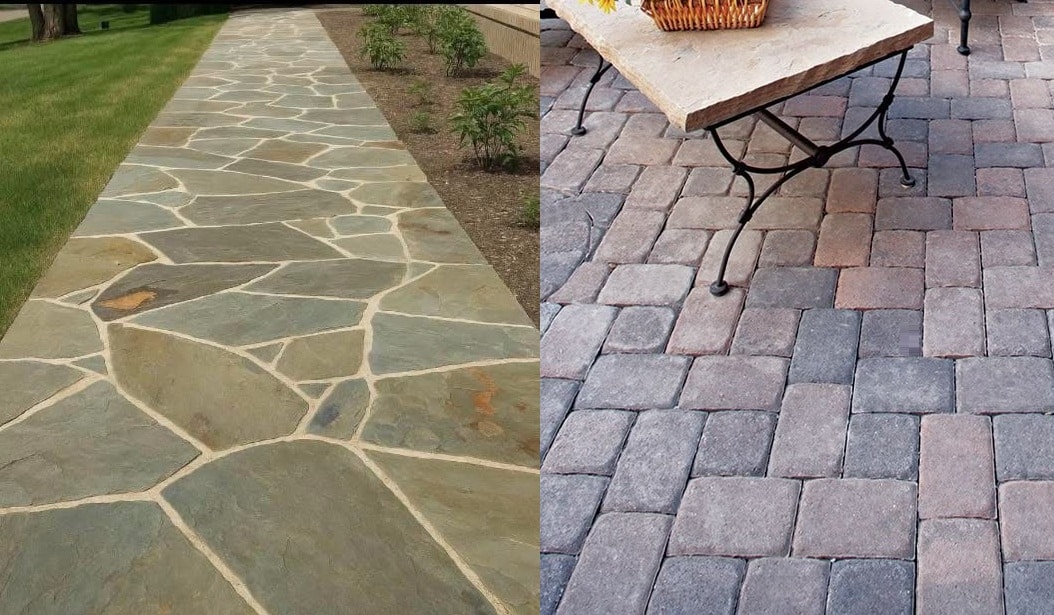
If you’re planning a new patio in Wayne, PA, one of the first decisions you’ll face is the material itself. The two most popular options, flagstone and pavers, both create beautiful, durable outdoor spaces, but they look and perform differently depending on your home’s style, budget, and how you plan to use the space. Here’s how they compare, and how to figure out which one fits your backyard.
The Case for a Flagstone Patio
Flagstone is a natural stone, quarried and cut into irregular or semi-irregular shapes. It’s a favorite for homeowners who want a patio that feels organic and blends naturally into a wooded or garden-style backyard, which is common throughout Wayne and the surrounding Main Line.
Pros of flagstone:
- Natural, one-of-a-kind look. No two pieces are exactly alike, which gives a flagstone patio a custom, upscale appearance that’s hard to replicate.
- Ages beautifully. Natural stone tends to weather gracefully over time rather than looking worn out.
- Design flexibility. Flagstone works well with irregular, flowing layouts, stepping stone paths, and gardens where a more organic patio landscape is the goal.
Considerations:
- Higher material cost. Natural stone is generally more expensive than manufactured pavers.
- Installation takes skill. Because pieces are irregular, a skilled installer needs to fit and set each stone individually, which affects labor time and cost.
- Joint maintenance. Depending on whether flagstone is set with mortared or sanded joints, you may need occasional joint maintenance to keep the surface stable and weed-free.
Ready to design your dream yard?
If you are thinking about enhancing your landscape, the best time to start planning is now.
Get StartedThe Case for Pavers
Pavers are manufactured concrete or brick units produced in consistent shapes and sizes. They’ve become a go-to option for homeowners who want a clean, uniform look with a wide range of design possibilities.
Pros of pavers:
- Consistent, versatile appearance. Pavers come in countless colors, patterns, and textures, making them easy to match to almost any home style.
- Durability. Individual pavers can be lifted and replaced if one becomes damaged or stained, without disturbing the rest of the patio.
- Efficient installation. Because units are uniform, a paver contractor can typically install a patio more efficiently than a comparable flagstone project.
- Strong performance in freeze-thaw climates. Pennsylvania winters put a lot of stress on outdoor surfaces, and quality pavers are engineered to hold up to that cycle of freezing and thawing.
Considerations:
- Less “natural” feel. Even high-end pavers won’t fully replicate the organic variation of natural stone.
- Joint sand upkeep. Paver joints are typically filled with polymeric sand, which may need occasional refreshing over the years.
Cost Comparison
In general, pavers tend to cost less per square foot in materials, while flagstone carries a higher price tag due to the nature of quarried stone and the skilled labor required to fit irregular pieces. That said, total project cost depends heavily on the size of the space, the pattern or layout, base preparation, and any additional features like seating walls, steps, or lighting. A detailed quote from an experienced paver contractor will give you the clearest picture for your specific backyard.
Which One Fits a Wayne, PA Backyard?
There’s no universal answer; it depends on your home and how you want the space to feel.
- If your home has a traditional stone exterior, a wooded lot, or a garden-style landscape, a flagstone patio will likely feel like a natural extension of the property.
- If you’re looking for a clean, modern look, a wide range of color and pattern options, or a slightly more budget-friendly path to a beautiful patio landscape, pavers are often the better fit.
- Many homeowners in Wayne actually combine both using flagstone for a main patio area and pavers for walkways, driveways, or pool surrounds to balance cost, style, and function across the whole property.
Getting Started
Whichever direction you lean, the quality of the installation matters just as much as the material choice. A properly compacted base, correct drainage slope, and skilled setting of each stone or paver are what determine whether your patio holds up for decades or starts shifting and settling within a few years.
Greenstone Gardens is a family-owned, second-generation hardscaping company serving Wayne, PA and the surrounding Main Line. As an experienced paver contractor and natural stone installer, our team can walk your property, talk through your goals, and help you decide whether a flagstone patio, a paver patio, or a combination of both is the right investment for your backyard.
Ready to compare your options in person? Call Greenstone Gardens at (484) 480-5335 or visit our contact page to schedule a consultation.
Common Questions:
1. Which material is better for the Pennsylvania climate?
Both materials are suitable for our local freeze-thaw cycles, provided they are installed correctly.
- Pavers are specifically engineered to handle temperature fluctuations, making them exceptionally durable.
- Flagstone, being a natural stone, is also highly durable. However, because it is a natural product, it is vital to source high-quality stone and ensure it is installed on a properly compacted base with appropriate drainage to prevent any cracking or shifting during the winter months.
2. Can I mix flagstone and pavers in the same design?
Absolutely. Combining materials is a popular design technique in the Main Line area. Many homeowners use flagstone for a primary, organic-feeling patio area near the home or garden, while using pavers for secondary walkways, driveways, or pool surrounds. This approach allows you to achieve the high-end look of natural stone where it counts most while maintaining budget and structural efficiency in larger or high-traffic areas.
3. How much maintenance should I expect?
- Paver patios are generally low-maintenance. They may require occasional cleaning and the refreshing of polymeric sand in the joints every few years to keep the surface stable and prevent weeds.
- Flagstone patios maintenance depends on the installation method. If the stones are set with mortared joints, you may eventually need to repair small cracks. If they are set in sand or stone dust, you may occasionally need to add more material to the joints to maintain a level, weed-free surface.
4. How do I know which material fits my home’s style?
Consider the architecture of your house and the surrounding landscape:
- Go with Flagstone if: Your home features stone accents, or if you want your patio to look like a natural, organic extension of a wooded lot or established perennial garden.
- Go with Pavers if: Your home has a more modern, traditional, or structured design, or if you want a wide variety of color and pattern options to create a specific, cohesive look.
5. What is the biggest factor in the longevity of a patio?
Regardless of whether you choose flagstone or pavers, the installation process is the most critical factor in your patio’s lifespan. A beautiful material will fail prematurely if placed on a poor foundation. A professional contractor ensures proper excavation, a robust base of compacted aggregate, and correct grading for water runoff. These technical steps are what prevent sinking, shifting, and water damage, ensuring your patio remains an asset for decades.
6. Why does the cost between these two materials vary?
The cost difference primarily comes down to two factors: material sourcing and labor.
- Flagstone is a natural product that requires more time and artisanal skill to fit together, as each piece has a unique shape and thickness.
- Pavers are uniform, which allows for a more streamlined and efficient installation process.
Professional Landscaping & Hardscaping Contractor in Wayne, PA
With over 44 years of personal industry experience, we’ve dedicated ourselves to serving both residential and commercial clients with unparalleled landscaping services, including hardscaping, drainage solutions, landscape design, and outdoor kitchens.