
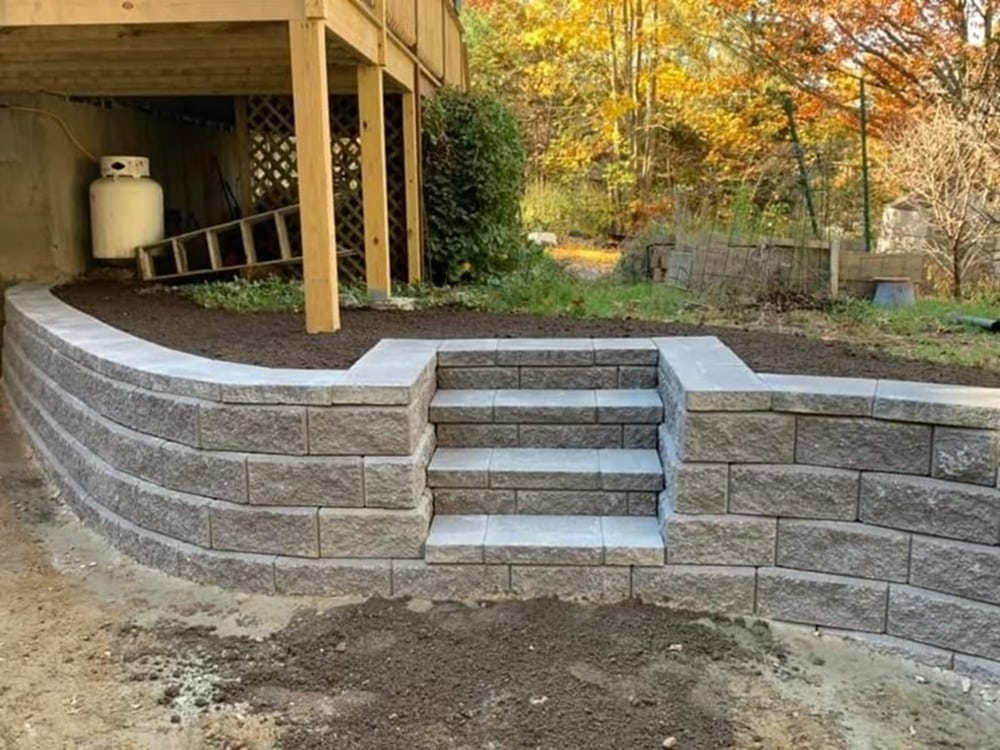
In the spring, people who own homes in Pennsylvania think about flowers, new plantings, and fresh mulch. But the land’s structural integrity is much more important than its beauty. That’s where retaining walls do their most important work without being noticed.
The spring in southeastern Pennsylvania is beautiful and never-ending. Snowmelt, heavy rains in April, and wet clay soils all make it easy for erosion, slope shifts, and water damage to occur. These things can slowly ruin even the most well-kept yard. We’ve seen how a well-built retaining wall can make a landscape last for decades instead of needing expensive repairs every few years at Greenstone Gardens.
This is your guide to understanding why retaining walls are important and why spring is the best time to buy one for your Newtown Square property if you’ve never thought about them beyond how they look.
Why Spring Is the Critical Season for Retaining Walls in PA
- During the winter, freeze-thaw cycles make the soil expand and the slopes weaker. In the spring, you can see the damage.
- Heavy rain in April and May speeds up erosion on grades that aren’t protected.
- Clay soils that are too wet in Chester County move and slide without the right support.
- Spring is the best time to install things before the summer heat cures and sets them perfectly.
- Putting in new plants and garden beds early keeps them safe from washout before summer.
6 Reasons Retaining Walls Are Your Landscape’s Best Investment
1. They Stop Erosion in Its Tracks
Newtown Square’s sloped yards are pretty, but they are also easy to break into. Heavy rain takes away valuable topsoil, makes plant roots less stable, and slowly lowers the grade if it doesn’t have the right support. A well-built retaining wall keeps that soil in place, which protects everything above and below it. It’s not only a feature of the landscape; it’s also a long-term investment in the land.
2. They Create Usable Flat Space on Sloped Lots
A lot of Main Line and Newtown Square homes are on slopes that make it hard to live outside. We can make level terraces out of steep slopes with retaining walls. This gives us flat areas for patios, garden beds, fire pits, play areas, or lawns. The hillside that used to be useless is now usable square footage that adds real value to your home and daily life.
3. They Manage Stormwater Beautifully
Don’t mess around with PA spring storms. Retaining walls, especially those with good drainage systems behind them, redirect and slow down stormwater flow instead of letting it pool against your foundation or run down your beds. A well-built wall, along with gravel backfill and drainage pipes, becomes an active part of your property’s water management plan and protects the foundation of your home at the same time.
4. They Elevate Curb Appeal and Property Value
A well-designed retaining wall can really make a place look nice. A retaining wall adds architectural definition, visual weight, and a sense of permanence that makes the whole landscape look better. It can be made of tumbled bluestone, natural fieldstone, or crisp segmental block, depending on the style of your home. People who want to buy notice. Notice to appraisers. A retaining wall is not only useful, but also looks nice.
5. They Protect Structures, Driveways & Foundations
Soil pressure against driveways, walkways, and the foundations of homes is a hidden danger. That pressure causes cracks, shifts, and expensive structural repairs over time. A retaining wall placed in the right spot takes the pressure off, protecting your hardscaping investments and foundation from slow damage. Think of it as insurance that looks great in your yard and is also beautiful.
Choosing the Right Wall for Your Property
Not all retaining walls are the same. The best one for you will depend on the slope of your site, the type of soil you have, how you want it to look, and how much money you have. A quick look at the different types of walls Greenstone Gardens installs in Newtown Square and the area around it:
1. Segmental Block Walls
Interlocking concrete blocks made to be strong and useful. Great for walls that are taller, have curves, or have steps. The most popular choice in Newtown Square for their durability and clean aesthetic.
2. Natural Stone Walls
Fieldstone, flagstone, or quarried bluestone can be laid dry-stack or with mortar. A timeless style that looks great in older Main Line homes and naturalistic gardens.
3. Poured Concrete Walls
Maximum structural strength for properties that are next to businesses, have steep grades, or have a lot of weight on them. Often covered in stone veneer for a polished look.
4. Timber & Boulder Walls
Natural-looking landscapes with rustic, organic solutions. Best for shorter areas and casual garden spaces where a softer, more natural look is wanted.
The Greenstone Gardens Difference
It looks easy to build retaining walls. It’s not easy to build them the right way. Before we put up any walls, we do a full site assessment to look at things like how water drains, what the soil is made of, how steep the slope is, and how much weight it can hold. We design the drainage layer behind every wall so that water never builds up and weakens the structure from the inside.
For decades, our team has been helping people in Newtown Square and the surrounding Main Line area. We know how hard it is to deal with southeastern Pennsylvania’s clay-heavy soils, heavy seasonal rains, and big freeze-thaw cycles. Greenstone Gardens builds your retaining wall to last through trends, seasons, and decades.
We put the same level of skill and care into every project, whether you need a single garden terrace wall or a complicated multi-tiered system that changes the look of your whole backyard. Look at what we’ve done and see why so many homeowners in Newtown Square trust Greenstone Gardens with their most important landscaping projects.
Common Questions:
1. Do I really need a retaining wall, or can I just use plants to stop erosion?
While deep-rooted plants can help with surface erosion, they cannot counteract hydrostatic pressure (the weight of water-saturated soil). In Pennsylvania, our heavy spring rains turn clay soil into a heavy, sliding mass. A retaining wall provides the structural “backbone” that plants alone cannot, preventing your slope from eventually shifting toward your home’s foundation or driveway.
2. How long does a typical retaining wall last in the Main Line area?
The lifespan depends heavily on the materials used and the quality of the installation:
- Segmental Block & Poured Concrete: Can last 50 to 100 years when engineered correctly.
- Natural Stone: Often lasts lifetime(s), though dry-stack walls may need minor settling adjustments over the decades.
- Timber: Generally lasts 15 to 25 years before the wood begins to succumb to PA’s high humidity and ground moisture.
3. Will I need a permit to build a retaining wall in Newtown Square?
In many Pennsylvania townships, including Newtown Square and the surrounding Main Line, walls over a certain height (usually 4 feet) require a building permit and often a sealed plan from a structural engineer. Greenstone Gardens handles the assessment of local codes to ensure your wall is fully compliant and safe.
4. Why is drainage more important than the “face” of the wall?
In southeastern PA, the #1 cause of wall failure is trapped water. When water can’t escape from behind the wall, it freezes and expands in the winter or creates immense pressure in the spring. We install a gravel backfill and perforated pipe system (weep holes) behind every wall to ensure water flows through the structure rather than pushing it over.
5. How do I choose between natural stone and segmental blocks?
It usually comes down to architecture and budget:
- Segmental Blocks: Best for modern homes, very tall slopes, or tight budgets. They are engineered for precision and strength.
- Natural Stone: Best for historic Main Line estates or homeowners who want a unique, “old-world” aesthetic. While often more labor-intensive, the look of weathered bluestone or fieldstone is unmatched.
6. Can a retaining wall actually increase my property value?
Absolutely. Beyond the “curb appeal” of professional hardscaping, a retaining wall adds functional square footage. By turning a steep, unusable hill into a flat, usable lawn or patio area, you are effectively increasing the “living space” of your property, which is a major selling point for future buyers.