
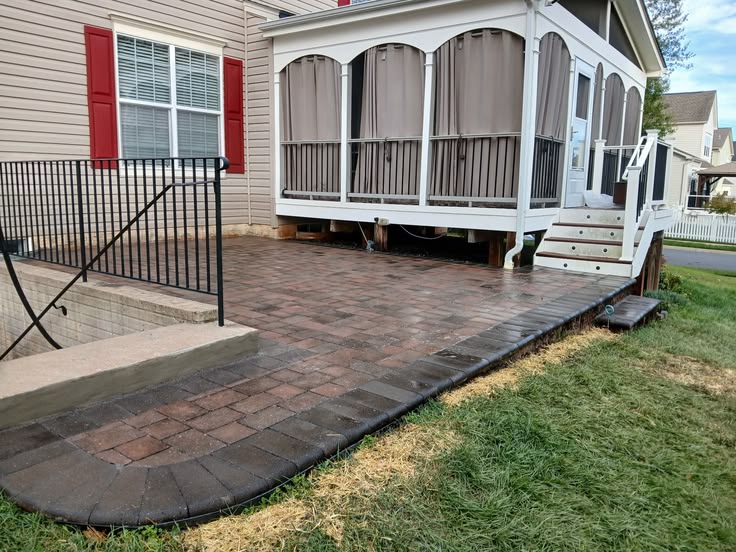
In November, Wayne, PA homeowners have a short window before snow to protect new patios, walkways, driveways, and retaining walls. The first winter is the hardest because joint sand is still locking in and new concrete is still curing. Freeze-thaw cycles, de-icing salt, and careless snow removal cause most early damage. Clear drainage, skip rock salt, use sand, shovel gently, and book a pre-winter inspection with a professional hardscaping service.
Why Is the First Winter So Hard on New Hardscapes?
A new hardscape looks finished, but it is still adjusting. Joint sand is still working its way down and locking the pavers together, and new concrete is still gaining strength. In Pennsylvania, winter tests all of that at once.
The main stress is freeze-thaw. Water enters tiny gaps in joints, cracks, and porous surfaces, freezes, and expands. When it thaws, the gap is slightly larger. Repeat that dozens of times in a season and small flaws become visible damage.
Three other factors add to the load:
- Snow and ice weight on walls, steps, and edges.
- De-icing chemicals that can scale concrete and wash out joint material.
- Shovels, blowers, and plows that can chip edges and dislodge pavers.
Most first-winter damage can be prevented with a few weeks of preparation. That is why November, before the ground freezes and snow arrives, is the right time to act.
What Should You Do in November Before the First Snow?
Work through this checklist while the ground is still workable and temperatures allow outdoor repairs.
- Walk every hardscape and take photos. Document cracks, gaps, loose units, and low spots so you can compare after storms and share with your contractor if issues arise.
- Clear all drainage. Remove leaves and debris from drains, weep holes on retaining walls, gutters, and downspouts. Water that has nowhere to go will freeze in the wrong place.
- Redirect downspouts. Make sure roof runoff flows away from patios, steps, and walls, not onto them.
- Check joints. If joint sand or polymeric sand has washed out, ask your installer whether it can be refilled before winter. Some products need dry weather to set.
- Reset or flag loose units. A loose paver or cap holds water and can shift under foot traffic.
- Mark edges and corners. Place stakes or reflectors at driveway edges, walkway borders, and wall ends so snow crews and plow drivers know where to stop.
- Stock the right traction material. Buy clean sand or grit and a plastic shovel before the first storm.
- Schedule a pre-winter inspection. A professional can spot settling, drainage gaps, and warranty items you may miss.
If you complete only two steps, make them drainage and de-icer choice. Those prevent the most damage.
Ready to design your dream yard?
If you are thinking about enhancing your landscape, the best time to start planning is now.
Get StartedHow Do Different Hardscapes Respond to a Pennsylvania Winter?
Not every hardscape faces the same risks. Here is what to watch for on each type.
Paver Patios and Walkways
Interlocking pavers handle freeze-thaw well when the base is compacted and drainage is correct. In the first winter, watch for joint sand washing out, minor settling, and white haze called efflorescence, which is a harmless mineral deposit that usually fades over time. Avoid sharp metal tools and ice picks that chip edges.
Driveways
Driveways carry the most weight and see the most snow removal. Keep plow blades slightly raised or fitted with a plastic or rubber shoe, and avoid piling snow tightly against edges, where meltwater can seep into the base.
Retaining Walls and Segmental Walls
Retaining walls are most vulnerable to water trapped behind them. Frozen drains can build pressure against the wall. Keep weep holes and drain outlets clear, and do not stack heavy snow at the top of the wall. Watch for bulging, leaning, or widening gaps. If you see them, call a professional promptly.
Poured Concrete Steps and Slabs
New concrete is more sensitive to de-icers than older concrete. Many contractors recommend avoiding chemical de-icers entirely during its first winter. Use sand for traction instead.
Steps and Landings
Steps collect ice in shaded corners and trap water on treads. Keep them clear, and avoid scraping hard against edges.
How Should You Remove Snow From New Pavers, Concrete, and Driveways?
How you remove snow matters as much as what you put down. Follow this process:
- Shovel soon after snowfall. Fresh snow is easier to move than packed snow, and it reduces the ice layer that forms.
- Use a plastic or rubber-edged shovel. Metal edges chip pavers and catch on joints.
- Push in the direction of the joints and paver pattern when possible to avoid catching edges.
- Leave a thin layer rather than scraping to the surface. The remaining dusting will melt or can be swept.
- Set snow blower skid shoes slightly higher so the housing does not scrape the surface.
- Tell plow contractors where the edges are. Mark boundaries and ask them to raise the blade or use a shoe.
- Pile snow away from walls, steps, and planting beds. Meltwater should drain away from structures, not toward them.
Avoid chipping ice with metal tools. If a patch stays icy, sprinkle sand and wait for the sun.
Should You Seal Pavers in Late Fall?
Usually not. Sealers need a dry surface and temperatures within the range printed on the product label, and cool, damp November conditions often fall outside it. A sealer applied too cold or too damp can cloud, trap moisture, or fail to bond.
If your installer recommended sealing, ask when. In many cases the better plan is to wait until spring, when surfaces are dry and temperatures are reliable. Pavers can get through winter without sealing as long as the joints and drainage are sound.
What Winter Damage Should You Watch For in the First Year?
Check your hardscapes after each major storm and after the first big thaw. Not every change is a problem, but these signs deserve attention:
- Widening cracks or new cracks in concrete
- Pavers that rock, lift, or sink under foot
- Standing water after the snow melts
- Washed-out joint sand or gaps between units
- Wall movement, such as leaning, bulging, or separating blocks
- Flaking or scaling on the surface of concrete
- Soil erosion at the edges of walkways, patios, or walls
Photograph what you find, note the date, and contact your installer. Many installers offer workmanship warranties, and documenting early issues helps.
When Should You Call a Hardscaping Professional?
Call a professional when a problem is structural, recurring, or growing. Leaning walls, sinking pavers across a large area, and water pooling against a foundation are not DIY fixes.
When choosing hardscaping services, look for a company that:
- Offers design, installation, and repair under one roof
- Explains base preparation, drainage, and compaction clearly
- Provides a written warranty and a clear plan for first-year follow-up
- Understands local freeze-thaw conditions and soil
- Is willing to inspect your project before winter and after the thaw
A pre-winter visit is far less expensive than emergency repairs in January. To schedule an inspection of your new patio, walkway, driveway, or wall in Wayne, PA, contact the team.
Common Questions:
1. Can I install a hardscape in winter in Pennsylvania?
It depends on the conditions. Frozen ground prevents proper base compaction, so most installers avoid major work once the ground freezes. Planning in November for a spring start is usually the safer route.
2. Do new pavers need to be sealed before winter?
No. Properly installed pavers do not require sealing to survive winter. If you plan to seal, wait for dry, mild spring weather and follow the product label.
3. Can I use rock salt on a new paver patio?
It is best to avoid it. Rock salt can wash out joint material and harm surrounding plants. Use sand for traction and shovel promptly instead.
4. How long should new concrete cure before using de-icers?
Many contractors recommend avoiding de-icing chemicals for the first winter. Confirm the timing for your project with your installer.
5. Will freeze-thaw cycles damage new pavers?
Well-installed pavers on a compacted, well-drained base are designed to handle freeze-thaw. Problems usually come from poor drainage, weak base, or washed-out joints.
6. Is it okay to plow a new paver driveway?
Yes, with care. Raise the blade slightly or use a plastic or rubber shoe, mark the edges, and avoid pushing snow aggressively against borders.
7. Why is white residue appearing on my new pavers?
It is likely efflorescence, a natural mineral deposit that often fades with weathering. It is typically cosmetic. Ask your installer if it persists.
Professional Landscaping & Hardscaping Contractor in Wayne, PA
With over 44 years of personal industry experience, we’ve dedicated ourselves to serving both residential and commercial clients with unparalleled landscaping services, including hardscaping, drainage solutions, landscape design, and outdoor kitchens.