 Skip to content
Winterizing Your Property Helps Protect Your Home
As temperatures dip and winter settles in across southeastern Pennsylvania, your outdoor spaces need a little extra care. Knowing how to winterize your patio and hardscape features now can prevent costly damage later—and keep everything looking beautiful when spring returns.
At Greenstone Gardens, a family-owned, second-generation company based in Newtown Square, PA, we bring over 44 years of hands-on experience in hardscaping, drainage, and landscape design. We’ve seen firsthand how proper winter prep can extend the life of patios, walkways, and outdoor kitchens.
Start with a Thorough Cleaning
Before freezing temperatures arrive, clear away fallen leaves, dirt, and debris from patios and walkways. Organic material traps moisture, which can seep into pavers or natural stone and expand when frozen, leading to cracks or shifting. A gentle rinse and light scrub are often enough—avoid high-pressure washing late in the season, as excess water can penetrate surfaces just before a freeze.
Seal Surfaces for Added Protection
Sealing is one of the most effective ways to protect hardscaping through winter. A quality sealer helps repel water, reduce staining, and minimize damage from freeze-thaw cycles. This is especially important for pavers and natural stone, which are more porous than concrete.
If your patio or walkway hasn’t been sealed in a few years, fall or early winter is an ideal time to address it. Professional sealing ensures the right products are used for your specific materials and climate. Our team regularly helps homeowners protect their investments through tailored hardscaping services designed for long-term durability.
Choose Material-Safe De-Icers
Not all ice melt products are created equal. Traditional rock salt can be harsh on pavers, concrete, and nearby plantings, causing surface erosion and discoloration over time. Instead, opt for material-safe, calcium magnesium acetate–based de-icers that are gentler on hardscapes and landscaping.
Use de-icers sparingly and sweep away residue once ice melts to avoid buildup. This small habit can significantly reduce wear on your patio and walkways throughout the winter months.
Protect Furniture and Outdoor Kitchens
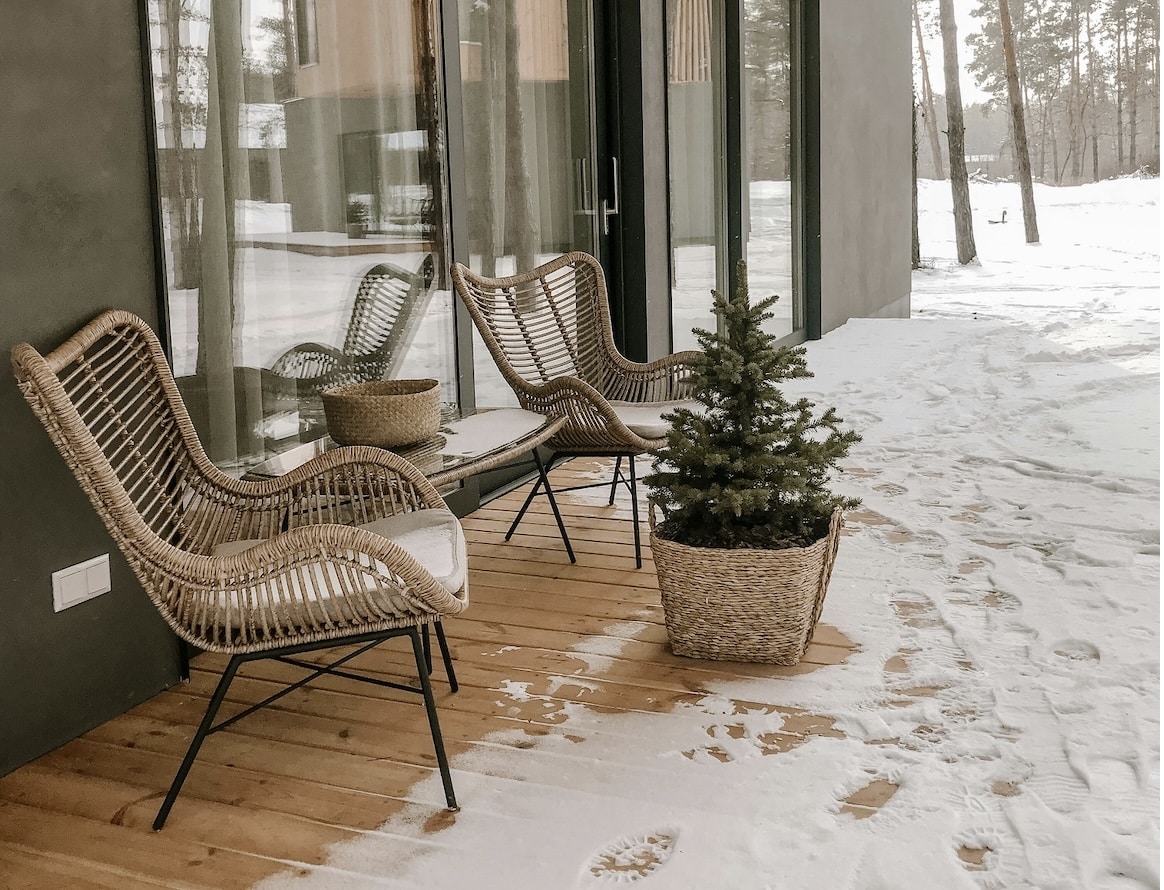
Outdoor furniture, grills, and kitchen components should be covered or stored whenever possible. Water left inside cabinetry or appliances can freeze and cause cracks or mechanical issues. Shut off and drain water lines connected to outdoor kitchens to prevent burst pipes—one of the most common winter-related problems we see in spring inspections.
Address Drainage Before Snowfall
Winter often reveals hidden drainage issues. Melting snow needs a clear path away from patios and walkways to prevent pooling and ice formation. If you’ve noticed standing water in colder months, now is the time to address it. Proper grading and drainage solutions help protect hardscapes and reduce slip hazards.
For inspiration on refreshing outdoor spaces during colder months, this guide to a winter patio makeover offers helpful seasonal insights.
Schedule a Winter Inspection
Winter inspections are an easy way to catch small issues before they become major repairs. A professional eye can spot loose pavers, compromised joints, or drainage concerns that may worsen with freezing temperatures.
If you’d like expert help winterizing your patio, walkway, or hardscape features, Greenstone Gardens is here for you. Contact us today through our contact page to schedule a winter inspection and protect your outdoor investment all season long.