 Skip to content
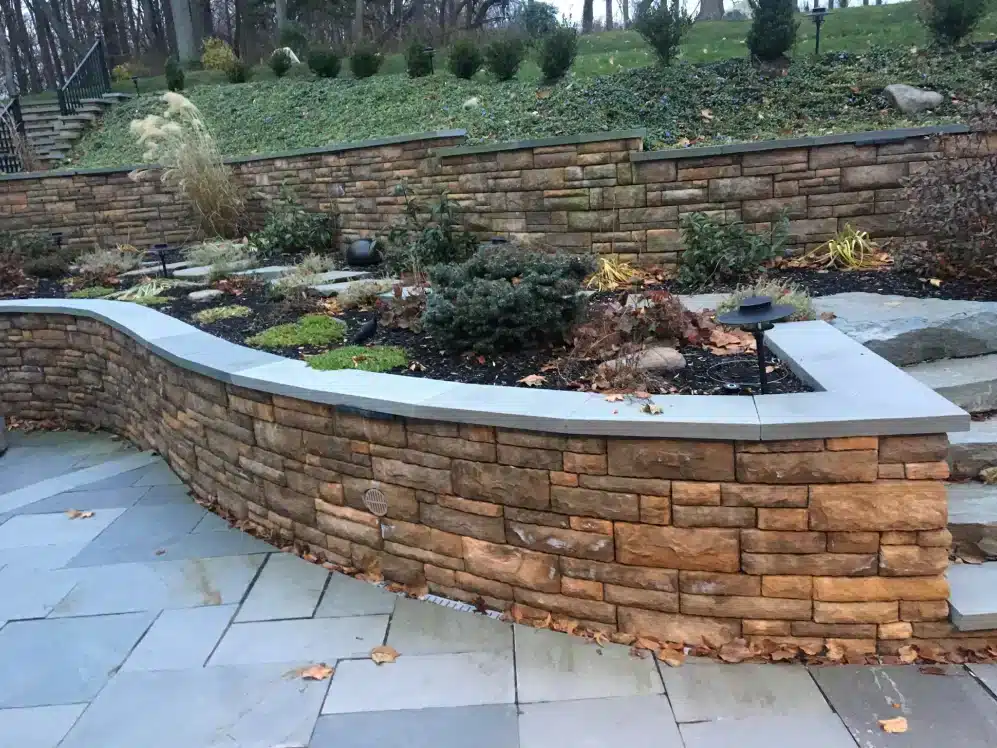
If your backyard slopes downhill, you may have noticed soil washing away after heavy rain, plants struggling to stay rooted, or mulch constantly migrating where it doesn’t belong. These are classic signs of erosion — and they’re especially common in Pennsylvania landscapes where rain, snowmelt, and freeze-thaw cycles put pressure on uneven terrain. This is where retaining walls play a crucial role.
At Greenstone Gardens, a family-owned, second-generation landscaping company based in Newtown Square, PA, we’ve spent more than 44 years designing and building outdoor spaces that are as functional as they are beautiful. Retaining walls are one of the most effective tools we use to protect sloped yards while enhancing overall landscape design.
Why Erosion Happens on Sloped Yards
Erosion occurs when gravity and water work together to pull soil downhill. On sloped properties, rainwater accelerates as it flows, carrying soil particles with it. Over time, this leads to:
- Bare patches and exposed roots
- Muddy runoff after storms
- Uneven ground and sinking areas
- Damage to nearby structures, patios, or foundations
Without intervention, erosion can worsen each season, making the yard harder to maintain and less safe to use.
What Is a Retaining Wall?
A retaining wall is a structural barrier designed to hold back soil and reshape sloped land into stable, usable levels. By resisting lateral pressure from the earth behind it, the wall prevents soil from shifting or washing away. You can learn more about the general definition and history of retaining walls here.
Professionally designed retaining walls do more than hold soil — they actively manage water and protect the long-term integrity of your landscape.
How Retaining Walls Control Erosion
Retaining walls protect sloped yards in several important ways:
- Soil stabilization: The wall physically supports soil, preventing downward movement.
- Water management: Integrated drainage systems redirect water safely, reducing pressure behind the wall.
- Grade correction: Slopes can be terraced into level planting beds or usable outdoor spaces.
- Landscape protection: Lawns, gardens, patios, and hardscapes remain intact during heavy rainfall.
When paired with proper drainage solutions, retaining walls become a powerful defense against erosion-related damage.
Signs You May Need a Retaining Wall
Not sure if a retaining wall is necessary? Common indicators include:
- Noticeable soil runoff after rain
- Cracking or shifting ground
- Leaning trees or exposed roots
- Water pooling at the base of a slope
- Difficulty maintaining grass or plants
In these cases, professional evaluation is key. Poorly designed or improperly built walls can fail over time, making expert planning essential.
Why Design and Installation Matter
A retaining wall must be engineered for height, soil conditions, water flow, and material selection. At Greenstone Gardens, we approach every project with careful planning, ensuring walls are both structurally sound and visually integrated into the landscape. Our retaining wall services are designed specifically for local conditions in Newtown Square and surrounding Pennsylvania communities.
Protect Your Yard with Greenstone Gardens
Retaining walls don’t just prevent erosion — they create opportunity. With the right design, they can transform a challenging slope into a stunning, functional outdoor space.
If erosion is threatening your yard, it’s time to bring in trusted professionals. Contact Greenstone Gardens today to schedule a consultation and protect your landscape for years to come: