
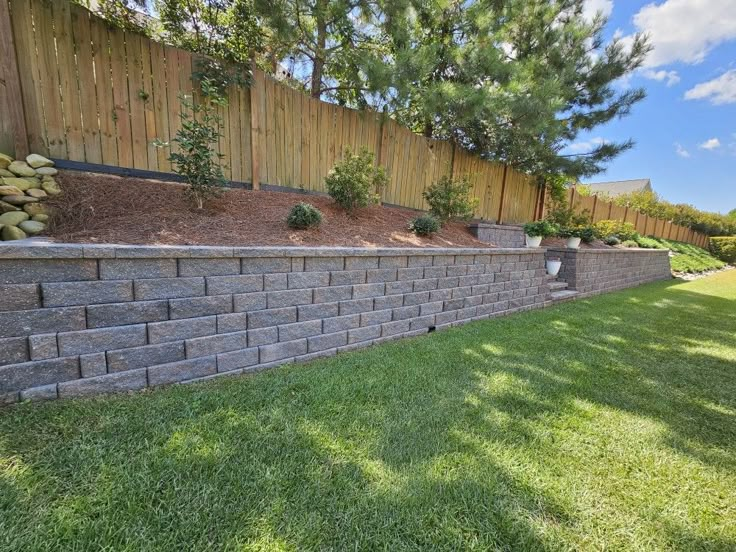
November is a great time for Wayne, PA homeowners to take a close look at their retaining walls. Repair a retaining wall when damage is isolated and the wall is plumb; replace it when it leans, bows, slides, or repairs approach half the cost of a new wall. Poor drainage causes most failures, and freeze-thaw cycles make it worse. Segmental walls can often be rebuilt in sections, and retaining wall and hardscaping work continues throughout the winter, so you can book an assessment whenever you’re ready.
Why Do Retaining Walls Fail in the First Place?
Before choosing repair or replacement, find out what is pushing on your wall. Soil is heavy, and wet soil is heavier. In Wayne, PA, winter adds freeze-thaw cycles, snow loads, and de-icing salt. Whether your wall is segmental, poured concrete, stone, or timber, the same forces apply.
The most common causes of failure include:
- Poor drainage. Water trapped behind the wall builds hydrostatic pressure that can far exceed the soil load the wall was designed for.
- Inadequate base preparation. A wall built on soft or uncompacted soil will settle unevenly.
- Missing or insufficient geogrid. Taller segmental walls rely on reinforcement layers that tie the wall into the soil mass. Without them, the wall behaves like a stack of blocks rather than a structure.
- Overloading. Driveways, sheds, pools, or added fill above the wall can exceed its design capacity.
- Tree roots and freeze-thaw cycles. Roots pry blocks apart, and water expanding inside joints and cracks widens them.
- Age and material deterioration. Timber rots, mortar crumbles, and older stone walls loosen over time.
Knowing the cause matters because it determines whether a repair can succeed. Fixing a symptom while ignoring the cause is the most common reason repaired walls fail again.
Why Does Winter Make Retaining Wall Problems Worse in Wayne, PA?
As winter approaches, small flaws in a retaining wall can become bigger ones. Water seeps into cracks and joints, expands as temperatures drop, and pushes blocks apart. When it thaws, the gap is larger and the cycle repeats. Snow piled at the top adds weight, melting snow adds water behind the wall, and de-icing salt can damage concrete units and nearby plants. That is why November is a smart time to inspect, decide, and address what you find, and why winter is a good time to get repairs done before spring rains arrive.
What Are the Warning Signs of a Failing Retaining Wall?
Catching problems early gives you more options and usually lowers cost. Walk the length of your wall this month and look for these signs.
Signs You May Only Need a Repair
- One or two blocks that have shifted, chipped, or cracked
- Minor surface cracks that are not widening
- Loose or missing cap stones
- Weep holes or drain outlets that are clogged
- Small areas of soil erosion at the ends of the wall
- Efflorescence (white mineral staining) with no movement
Signs You Likely Need a Replacement
- The wall visibly leans forward or bows outward in the middle
- Horizontal cracks running along the wall face
- Blocks separating, with gaps widening over time
- The wall base is sliding or has rotated outward
- Sinkholes, depressions, or cracked pavement behind the wall
- Water seeping or pooling at the base with no functioning drainage
- Previous repairs that keep failing in the same location
If you see more than one item from the second list, treat it as a safety issue rather than a cosmetic one, particularly if the wall supports a driveway, patio, or building foundation.
How Do You Know If a Retaining Wall Can Be Repaired?
A wall is generally a good repair candidate when the structure is fundamentally sound and the damage is limited to a defined area. Three questions help sort this out:
- Is the wall still plumb and straight? A wall that holds its original line is usually stable.
- Is the damage localized? Problems confined to a corner, an end, or a short section can usually be rebuilt in place.
- Can the cause be corrected? If the cause is drainage or a single overloaded spot, and you can fix it, repair makes sense.
Segmental walls have a real advantage here. Because they are built from interlocking concrete units, a contractor can often remove the damaged section, rebuild the base, add drainage and geogrid where needed, and reset the units, leaving the undamaged portions untouched.
What Is the Step-by-Step Process for Repairing a Segmental Retaining Wall?
Exact methods vary with wall height and design, and tall or load-bearing walls should be handled by a qualified contractor or engineer. In general, a professional repair of a segmental wall follows this sequence:
- Inspect and diagnose. Identify the failure cause, measure movement, and check drainage outlets, grading, and any added loads above the wall.
- Mark the repair zone. Define how far the damage extends beyond what is visible, since movement often reaches past the obviously broken blocks.
- Relieve pressure and excavate. Carefully remove soil behind the affected section and take down the damaged courses from the top.
- Correct the base. Re-excavate soft areas, install compacted aggregate base, and level it properly.
- Install or repair drainage. Add perforated drain pipe, clean drainage stone, and a filter fabric, and confirm the pipe outlets freely.
- Add reinforcement if required. Install geogrid at the specified courses and lengths.
- Rebuild the courses. Reset or replace units, keeping them level, with proper setback and unit-to-unit connection.
- Backfill and compact in lifts. Place drainage stone and soil in thin layers, compacting each.
- Cap and finish grading. Secure the cap units and regrade the surface so water runs away from the wall.
Skipping steps 5 and 8 is the most common reason DIY repairs fail within a few seasons.
Ready to design your dream yard?
If you are thinking about enhancing your landscape, the best time to start planning is now.
Get StartedWhen Should You Replace a Retaining Wall Instead?
Replacement is the right call when repair would only delay an inevitable failure. Consider replacement when:
- The failure is structural and widespread. A leaning or bowing wall indicates the entire system is overstressed.
- The original design was inadequate. Missing drainage, no geogrid, or an undersized base cannot be fixed without rebuilding.
- The materials are at end of life. Rotting timber and deteriorating mortared stone often cost more to patch than to replace.
- Repairs are approaching the cost of new construction. A common benchmark is when repairs reach about half of replacement cost.
- You are changing the site. If you plan to add a driveway, pool, or building near the wall, a stronger wall may be required.
- Safety is at stake. A wall holding back a slope above a home or walkway should not be gambled on.
Replacing also gives you a chance to upgrade: better drainage, proper reinforcement, and modern segmental units that are more durable and look better than the wall they replace.
How Long Do Segmental Retaining Walls Last in Pennsylvania?
When properly designed and installed with a compacted base, drainage, and geogrid where required, segmental retaining walls are known for long service lives, often several decades. Repeated freeze-thaw cycles shorten the life of any wall with poor drainage, and timber walls generally last a shorter time overall.
Longevity depends far more on installation quality and drainage than on the block itself. A well-built wall from standard units will outlast a poorly built wall made with premium units.
Can You Repair a Retaining Wall in Winter?
Yes. Retaining wall repair, replacement, and hardscaping work can be completed throughout the winter, so there is no need to wait for spring. Winter can actually be a convenient time to schedule work, and addressing problems now keeps a small issue from growing. If a wall is leaning and the lean is increasing, have a professional measure it promptly, because a wall that keeps moving can fail.
In the meantime, simple steps help: clearing drains, redirecting water, and keeping snow off the top of the wall.
How Do You Prepare a Retaining Wall for Winter?
Use this November checklist as the season begins:
- Clear drainage. Remove leaves and debris from weep holes, drain outlets, and downspouts.
- Redirect water. Make sure gutters and grading send runoff away from the wall.
- Inspect and photograph. Note cracks, gaps, and any lean so you can track changes after storms.
- Fix minor damage. Reset loose caps and replace chipped units before water gets in.
- Protect from plows and salt. Avoid piling snow or spreading rock salt against the wall.
- Book an assessment. Whether it’s November or January, a professional can evaluate your wall and schedule the work.
Who Should Assess Your Retaining Wall?
A qualified landscape and hardscape contractor experienced with segmental walls can evaluate the wall, identify the cause of movement, and tell you honestly whether repair or replacement makes more sense. Walls over roughly 4 feet, walls supporting structures or slopes, and walls near property lines may also need engineering input and permits, depending on your township’s rules. For a site-specific recommendation on your retaining wall in Wayne, PA, contact the team at Greenstone Gardens.
Common Questions:
1. How do I know if my retaining wall needs to be replaced?
Replace it if the wall leans, bulges, or slides, has horizontal cracks, shows widening gaps between blocks, or keeps failing after repairs. Localized damage with a plumb wall is usually repairable.
2. Is it cheaper to repair or replace a retaining wall?
Repair is cheaper upfront for localized damage. But if repairs approach about half the cost of replacement, or the cause is unfixed, replacement is typically the better long-term value.
3. What is the most common cause of retaining wall failure?
Poor drainage. Water trapped behind the wall creates pressure that can exceed the wall’s design load, especially when drain pipes, gravel, or weep holes are missing or clogged. Freeze-thaw cycles make it worse.
4. How long do segmental retaining walls last?
Properly designed and installed segmental walls often last several decades. Installation quality, base preparation, drainage, and reinforcement affect lifespan more than the unit itself.
5. Can I repair a segmental retaining wall myself?
Small jobs, like resetting a cap or replacing one low block, may be DIY-friendly. Taller walls or structural repairs involve drainage, compaction, and reinforcement and are best left to professionals.
6. Is a leaning retaining wall dangerous?
It can be. A leaning wall may be nearing failure, particularly if the lean is getting worse. Keep people and vehicles away from the area and get a professional assessment promptly.
7. What is the difference between a segmental wall and a regular retaining wall?
“Retaining wall” describes any wall that holds back soil. A segmental wall is one type, built from interlocking, dry-stacked concrete units, which makes sections easier to rebuild than mortared or poured walls.
8. Can retaining wall work be done in winter?
Yes. Greenstone Gardens completes retaining wall and hardscaping projects throughout the winter, so you can schedule an assessment and repairs whenever you need them.
Final Thoughts
The repair-versus-replace decision comes down to three things: how widespread the damage is, whether the underlying cause can be corrected, and how repair cost compares with a new wall. Localized damage on a plumb wall usually calls for repair. Leaning, bowing, or recurring failure points toward replacement. When in doubt, a professional assessment of your retaining wall is the most reliable way to avoid paying twice, and with winter work available, you don’t have to wait.
Need an expert opinion on your wall? Contact Greenstone Gardens Inc. at greenstonegardensinc.com to schedule an assessment.
Professional Landscaping & Hardscaping Contractor in Wayne, PA
With over 44 years of personal industry experience, we’ve dedicated ourselves to serving both residential and commercial clients with unparalleled landscaping services, including hardscaping, drainage solutions, landscape design, and outdoor kitchens.