
Summary
Outdoor kitchens face constant exposure to sun, rain, freeze-thaw cycles, and humidity, all of which can shorten their lifespan if not properly accounted for. Choosing weather-resistant materials, adding protective coverage, sealing surfaces regularly, and planning for proper drainage are all essential steps to keeping an outdoor kitchen looking and functioning great for years. Just as important is starting with a professionally built foundation proper outdoor kitchen installation prevents many weather-related problems before they ever have a chance to develop. Greenstone Gardens can help you design and build an outdoor kitchen made to handle whatever the seasons bring.
An outdoor kitchen is one of the best investments you can make in your backyard, but it’s also one that lives permanently exposed to the elements. Sun, rain, snow, humidity, and temperature swings all take a toll over time, and without the right precautions, even a well-built setup can suffer cracked countertops, rusted appliances, or warped cabinetry within just a few seasons. At Greenstone Gardens, we help homeowners not only plan a stunning outdoor kitchen but also protect that investment for years to come.
Why Weather Damage Happens
Outdoor kitchens face a different set of stresses than anything indoors:
- Moisture intrusion from rain and snow can rust metal components and warp wood or cabinetry over time
- UV exposure fades countertop finishes, cracks sealants, and breaks down certain plastics and fabrics
- Freeze-thaw cycles cause water trapped in small cracks or joints to expand and contract, widening damage each winter
- Humidity and condensation encourage mold and mildew growth in enclosed or poorly ventilated cabinetry
- Wind-blown debris can scratch surfaces or clog grill vents and drainage channels
Understanding these risks is the first step to designing and maintaining a kitchen that holds up.
Materials That Stand Up to the Elements
The single biggest factor in weather resistance is what your outdoor kitchen is built from in the first place.
1. Countertops: Granite, quartzite, and concrete are far more weather-resistant than laminate or untreated wood. They resist UV fading, moisture absorption, and temperature swings much better over time.
2. Cabinetry: Stainless steel (particularly marine-grade or powder-coated) resists rust far better than standard steel. Polymer and outdoor-rated cabinetry are also excellent choices where a more budget-friendly option is needed.
3. Appliances: Look for appliances explicitly rated for outdoor use, with weatherproof housings and rust-resistant components standard indoor appliances simply aren’t built for this environment.
4. Flooring: Textured, slip-resistant, and freeze-tolerant materials like natural stone or porcelain pavers handle moisture and temperature cycling far better than standard tile.
Protective Measures to Extend the Life of Your Outdoor Kitchen
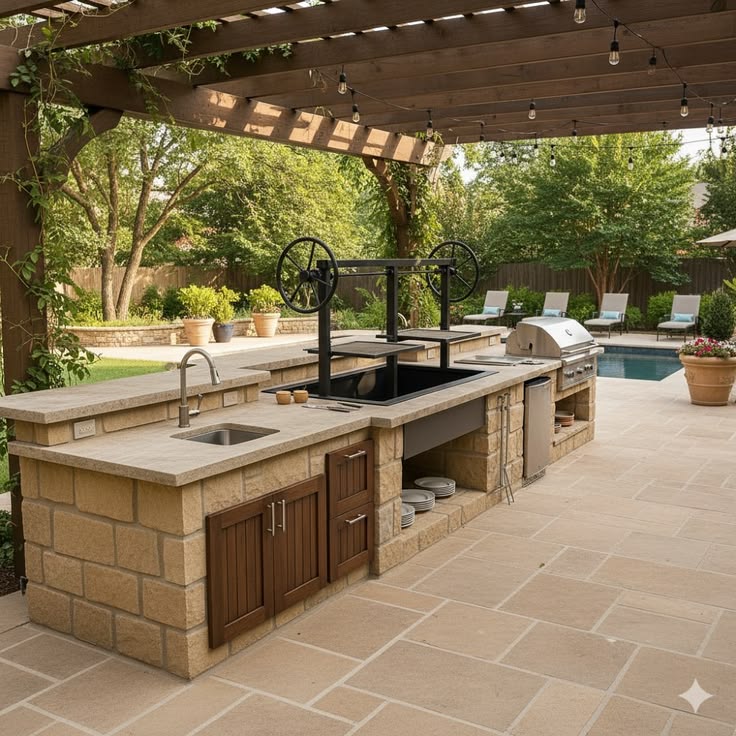
1. Add a Roof, Pergola, or Covered Structure
Even a partial cover dramatically reduces direct UV exposure and rain saturation, extending the lifespan of countertops, cabinetry, and appliances alike.
2. Use High-Quality Covers
Custom-fitted, weatherproof covers for grills and appliances are a simple, affordable way to block rain, snow, and debris during periods of non-use.
3. Seal and Reseal Surfaces Regularly
Natural stone countertops and grout lines should be resealed periodically to maintain their water and stain resistance, especially before winter weather sets in.
4. Plan for Proper Drainage
Water pooling around the base of an outdoor kitchen accelerates wear on cabinetry and flooring. Grading the surrounding area and incorporating drainage channels keeps water moving away from the structure.
5. Winterize Before the Cold Hits
Shutting off and draining water lines, covering appliances, and removing perishable components before winter prevents freeze damage that’s far more expensive to repair than to prevent.
6. Choose Ventilated Cabinetry
Proper airflow inside cabinet units prevents condensation buildup, reducing the risk of mold, mildew, and rust in enclosed storage areas.
Why Professional Installation Matters
Weather resistance starts long before the first storm and it starts with how the kitchen is built. Professional outdoor kitchen installation ensures proper flashing, sealing, drainage, and material selection from day one, all tailored to your local climate. A poorly installed kitchen can develop hidden moisture problems within cabinetry or under countertops that aren’t visible until real damage has already occurred.
Greenstone Gardens designs and installs outdoor kitchens built with weather resistance in mind from the start, using materials and construction methods suited to withstand seasonal extremes so you get years of reliable use, not repeat repairs.
Common Questions:
1. What’s the most weather-resistant material for outdoor kitchen countertops?
Granite, quartzite, and sealed concrete are among the most weather-resistant options, holding up well against UV exposure, moisture, and temperature swings compared to laminate or untreated wood.
2. Do I need to cover my outdoor kitchen appliances every time it rains?
It’s best practice, especially for appliances not explicitly rated for constant outdoor exposure. A well-fitted cover protects against rain, debris, and UV damage during periods when the kitchen isn’t in use.
3. How often should I reseal my outdoor kitchen countertops?
This depends on the material, but natural stone countertops typically benefit from resealing once or twice a year, ideally before periods of heavy rain or before winter weather sets in.
4. What does winterizing an outdoor kitchen involve?
Winterizing generally includes draining water lines, covering or storing appliances, removing perishable items, and inspecting for any damage that should be repaired before freezing temperatures arrive.
5. Can a roof or pergola really extend the life of an outdoor kitchen?
Yes. Even partial coverage significantly reduces direct rain saturation and UV exposure, which are two of the biggest contributors to weather-related wear on countertops, cabinetry, and appliances.
6. Does Greenstone Gardens handle the full outdoor kitchen installation process?
Yes, Greenstone Gardens manages the full process from design through installation, using weather-resistant materials and construction methods suited to your property and local climate.