
Summary
Basement water problems almost always trace back to poor drainage whether that’s inadequate grading, overwhelmed gutters, or groundwater pressure with nowhere else to go. The most effective fix combines several strategies: directing surface water away from the foundation, managing groundwater with French drains and sump pumps, and waterproofing as a final layer of protection. Because every property in Wayne has its own soil and drainage challenges, a professional assessment is the best starting point. Investing in the right drainage solutions in Wayne now can save homeowners thousands of dollars in water damage repairs later, and Greenstone Gardens is here to help design a system built for your specific property.
A wet basement isn’t just an inconvenience, it’s a warning sign. Water in your basement can lead to mold growth, structural damage, ruined belongings, and a drop in your home’s value. The good news? Most basement water problems are preventable with the right drainage solutions. At Greenstone Gardens, we help homeowners throughout Wayne protect their properties before small moisture issues turn into costly repairs.
Why Basements Flood in the First Place
Before diving into solutions, it helps to understand the problem. Basements sit below grade, which means they’re naturally the lowest point water gravitates toward. Common culprits include:
- Poor grading around the foundation that directs rainwater toward the house instead of away from it
- Clogged or undersized gutters and downspouts that dump water right next to the foundation
- Hydrostatic pressure building up in the soil after heavy rain, pushing water through cracks and porous concrete
- High water tables, especially common in low-lying areas of Wayne after seasonal storms
- Aging or absent drainage systems that were never designed for today’s storm intensity
Any one of these factors can lead to seepage, and often several are at play at once.
Effective Drainage Solutions for a Dry Basement
1. French Drains
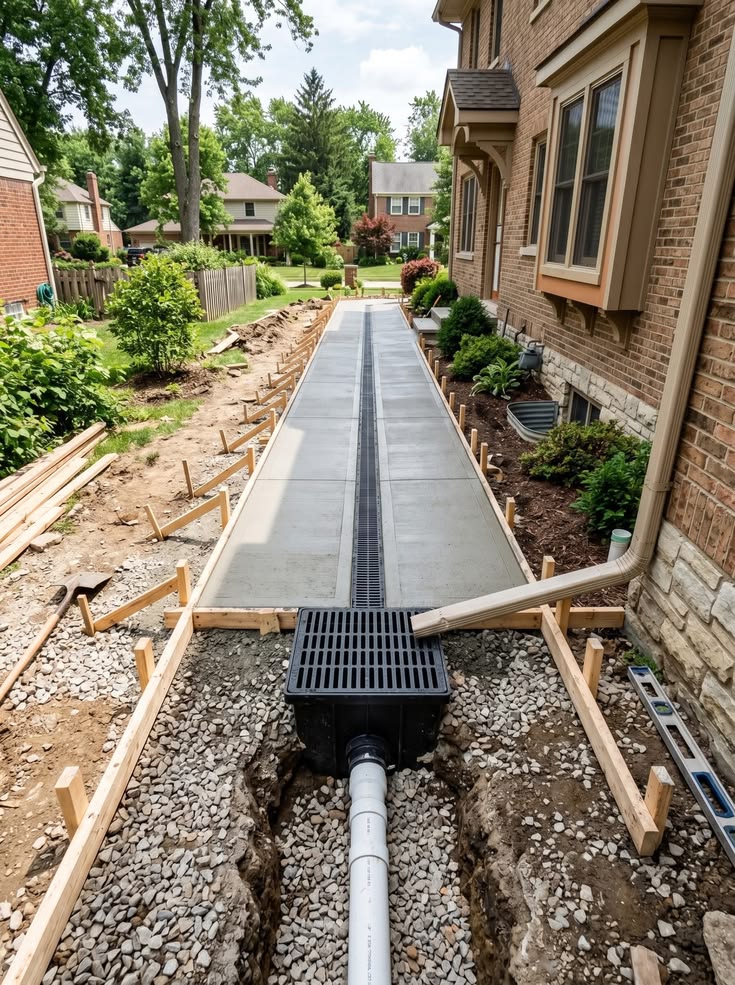
A French drain is one of the most reliable drainage solutions for redirecting groundwater away from your foundation. It consists of a perforated pipe set in a gravel-filled trench, which collects water and channels it to a safe discharge point before it ever reaches your basement walls.
2. Sump Pump Installation
For homes with a history of water intrusion, a sump pump is essential. It collects water that does make it into the basement and pumps it out automatically, often paired with a battery backup so it keeps working during power outages exactly when storms are most likely to strike.
3. Grading and Regrading
Sometimes the simplest fix is the most effective. Regrading the soil around your home so it slopes away from the foundation stops water from pooling against your walls in the first place.
4. Gutter and Downspout Extensions
Extending downspouts several feet away from the foundation prevents roof runoff from saturating the soil right where you don’t want it.
5. Foundation Waterproofing
Interior and exterior waterproofing membranes, combined with proper drainage, create a layered defense system that keeps moisture out even during Wayne’s heaviest downpours.
6. Dry Wells and Catch Basins
For yards that collect standing water, dry wells and catch basins capture excess runoff and let it slowly absorb into the ground, reducing pressure on your drainage system as a whole.
Why Local Drainage Services Matter
Every property is different. Soil composition, slope, proximity to storm drains, and local rainfall patterns in Wayne all affect how water moves around your home. That’s why generic fixes often fall short. Professional drainage services start with an on-site assessment to identify exactly where water is coming from and design a system tailored to your property, not a one-size-fits-all patch job.
Greenstone Gardens has worked with homeowners across Wayne to diagnose drainage issues and install lasting solutions, from simple downspout adjustments to full French drain and sump pump systems. Our goal is always the same: stop water before it becomes a problem, not after.
Common Questions:
1. How do I know if my basement needs a drainage solution?
Signs include musty odors, visible water stains on walls or floors, efflorescence (white chalky residue), peeling paint, or standing water after rainstorms. If you notice any of these, it’s worth getting a professional assessment before the issue worsens.
2. What’s the difference between a French drain and a sump pump?
A French drain intercepts and redirects water before it reaches your foundation, while a sump pump removes water that has already collected in a basement or crawl space. Most comprehensive drainage systems use both together for maximum protection.
3. How much does professional drainage installation cost?
Costs vary depending on the size of your property, soil conditions, and which combination of solutions your home needs. Greenstone Gardens provides on-site evaluations so you get an accurate, personalized estimate rather than a generic quote.
4. Can I fix basement water issues myself?
Minor fixes like extending downspouts or cleaning gutters can help, but persistent or serious water problems usually involve grading, hydrostatic pressure, or foundation issues that require professional drainage services to solve correctly and permanently.
5. How long does it take to install a drainage system?
Simple solutions like downspout extensions or regrading can often be completed in a day. More involved systems, like French drains or full waterproofing, may take several days depending on the scope of work.
6. Does Greenstone Gardens serve areas outside of Wayne?
Greenstone Gardens specializes in drainage solutions for homeowners throughout Wayne and the surrounding area. Contact us to confirm service availability for your specific location.