
Summary:
Wayne’s heavy clay soil and aging infrastructure make properties vulnerable to water damage. Key warning signs that you need professional drainage services include standing water after 24 hours, soggy lawns, water pooling near the foundation, structural cracks, soil erosion, basement mold, and short downspouts. Tailored solutions like French drains, catch basins, buried downspout extensions, and regrading prevent costly structural and landscape repairs.
Wayne and the surrounding Main Line sit on soil that does not drain especially well to begin with, and older properties in the area often rely on drainage systems that were never designed for how much stormwater today’s roofs, driveways, and patios actually shed. When that system starts to fail, the signs are not always obvious until the damage is already underway.
Below are seven signs that your property may need updated drainage services, what each one usually means, and when it is worth calling in a hardscaping and drainage contractor before a minor nuisance becomes a costly repair.
[CTA_1]
Why Drainage Problems Are So Common in Wayne, PA
Much of the Main Line sits on dense clay soil that absorbs water slowly, combined with rolling terrain that sends runoff toward the lowest point on a property, often right next to the foundation. Add in mature tree cover, older clay or cast iron drain lines original to many homes, and increasingly heavy rain events, and it is no surprise that drainage issues are one of the most common calls we get from homeowners in Wayne, Radnor, and Villanova.
The good news: most drainage failures give warning signs well before they cause serious damage. Catching them early is the difference between a straightforward fix and a foundation or landscape repair.
7 Signs You Need Drainage Services
1. Standing Water That Does Not Drain Within 24 Hours
A little puddling right after a heavy storm is normal. Water that is still sitting on your lawn, driveway, or patio a full day later is not. It usually means the soil beneath is compacted or saturated, an existing drain line is clogged or undersized, or the grading around that area no longer slopes away from the house the way it should.
2. Soggy or Spongy Areas in the Lawn
If certain sections of your yard feel spongy underfoot days after the last rain, water is likely collecting below the surface instead of moving through the soil or into a drain. Over time, this kills grass roots, invites moss and fungus, and signals that a surface or subsurface drainage system, such as a French drain, may be needed in that area.
3. Water Pooling Near the Foundation
This is the sign to take most seriously. Water that collects along the foundation, especially near basement walls or a walkout, can seep through even minor cracks and lead to efflorescence, musty basement odors, or long term structural damage. In most cases this points to negative grading, a failed downspout extension, or a drainage swale that is no longer directing water where it should.
4. Cracks in the Foundation, Driveway, or Patio
Water that repeatedly saturates the soil beneath a hardscaped or structural surface causes that soil to expand and contract, especially in Wayne’s clay heavy ground. New or widening cracks in a foundation wall, driveway, or patio are frequently a downstream symptom of a drainage problem rather than a standalone issue with the concrete or pavers themselves.
5. Erosion, Mulch Washout, or Exposed Roots
If mulch keeps washing out of the same garden bed, or you are noticing exposed tree roots and small gullies forming after storms, water is moving across your property faster and with more force than the landscape can handle. This is a common sign that surface runoff needs to be redirected through a proper drainage solution rather than left to find its own path.
6. A Musty Smell or Visible Mold in the Basement or Crawl Space
Persistent moisture below grade often shows up first as a smell before it shows up as visible damage. A musty basement or crawl space, especially one that gets noticeably worse after rain, usually means water is finding its way in from outside, and exterior drainage is frequently the more effective long term fix compared to interior sealing alone.
7. Downspouts That Dump Water Right Next to the House
Many older homes in the area still have downspouts that simply end at the foundation instead of extending water several feet away or tying into a buried drain line. This is one of the most common, and most fixable, sources of foundation moisture we find on Main Line properties, and it is often the first thing worth checking before assuming a larger system has failed.
At a Glance: Signs and Likely Causes
| Warning Sign | What It Usually Means |
| Standing water after 24+ hours | Clogged or undersized drain line, compacted soil, poor grading |
| Spongy, soggy lawn areas | Subsurface water not draining, may need a French drain |
| Pooling near the foundation | Negative grading, failed downspout extension, blocked swale |
| New or widening cracks | Repeated soil saturation and shifting near hardscape or foundation |
| Erosion or mulch washout | Uncontrolled surface runoff needing redirection |
| Musty smell or basement mold | Exterior moisture intrusion below grade |
| Downspouts ending at the house | Missing extensions or tie in to a buried drain line |
Drainage Solutions We Install in Wayne, PA
The right fix depends on where the water is coming from and where it needs to go. Common drainage solutions include:
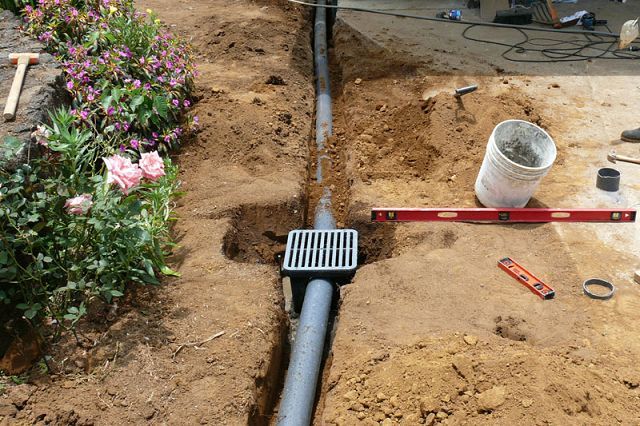
• Surface drainage systems, including catch basins and channel drains for patios, driveways, and low lying yard areas
• French drains to intercept and redirect subsurface water before it reaches the foundation
• Downspout extensions and buried downspout lines that carry roof runoff well away from the house
• Regrading and swales to reestablish proper slope across the property
• Waterproofing at the foundation for properties where exterior water management alone is not enough
• Sump pump installation for properties where water needs to be actively pumped away from a low point
In many cases, a property needs more than one of these working together. A downspout extension alone will not solve a grading problem, and regrading will not help if a drain line underneath is already collapsed or clogged. This is why a proper site assessment matters before any digging starts.
When to Call a Professional
A little seasonal puddling is not usually urgent. But if you are seeing water near the foundation, a musty basement smell, or cracks that seem to be getting worse, it is worth having a professional walk the property and identify the actual source before it turns into a bigger repair. Drainage problems rarely fix themselves, and they tend to get more expensive the longer they are left alone.
Get a Drainage Assessment in Wayne, PA
Greenstone Gardens is a family owned, second generation contractor providing drainage services throughout Wayne, Newtown Square, Radnor, Villanova, and the greater Main Line. We assess the full picture, grading, existing drain lines, hardscape, and soil conditions, before recommending a drainage solution, so the fix addresses the actual cause rather than just the symptom.
Noticing any of the signs above on your property? Call (484) 673-6777 or reach out through our contact page to schedule a drainage assessment.
Frequently Asked Questions
1. How much does a French drain cost in the Wayne, PA area?
Cost depends on length, depth, and how much of the yard needs to be excavated, along with whether the water needs to be daylighted, tied into an existing storm line, or routed to a dry well. A site visit is the most reliable way to get an accurate number for your property.
2. Can I fix a drainage problem myself?
Simple fixes, like adding a downspout extension or clearing debris from an existing drain, are reasonable DIY projects. Grading changes, French drains, and anything near the foundation are worth having a professional assess first, since an incorrect slope or depth can make the problem worse instead of better.
3. Will drainage work damage my lawn or landscaping?
There is some disruption during installation, particularly for trenched systems, but a good contractor will restore the area with seed, sod, or matching plantings once the work is complete. Most lawns recover fully within one growing season.
4. What is a “dry well,” and do I need one?
A dry well is an underground storage structure that holds excess water and allows it to slowly percolate back into the soil. We typically recommend these for properties that lack a natural “daylight” point (a place where water can be safely released via gravity, like a storm drain or a downhill slope) to prevent the system from simply dumping water onto a neighbor’s property.
5. Can I combine drainage work with a new patio project?
Yes, and in fact, it is often the most efficient time to do so. If you are planning a new patio, we can integrate channel drains, catch basins, or sub-surface drainage as part of the base construction. Addressing potential water issues before the new hardscape is installed is one of the best ways to protect your investment and prevent future shifting or settling.
Professional Landscaping & Hardscaping Contractor in Wayne, PA
With over 44 years of personal industry experience, we’ve dedicated ourselves to serving both residential and commercial clients with unparalleled landscaping services, including hardscaping, drainage solutions, landscape design, and outdoor kitchens.